 Classical Garden Pavilions
Cream Arched Garden Pavilion
Design collection
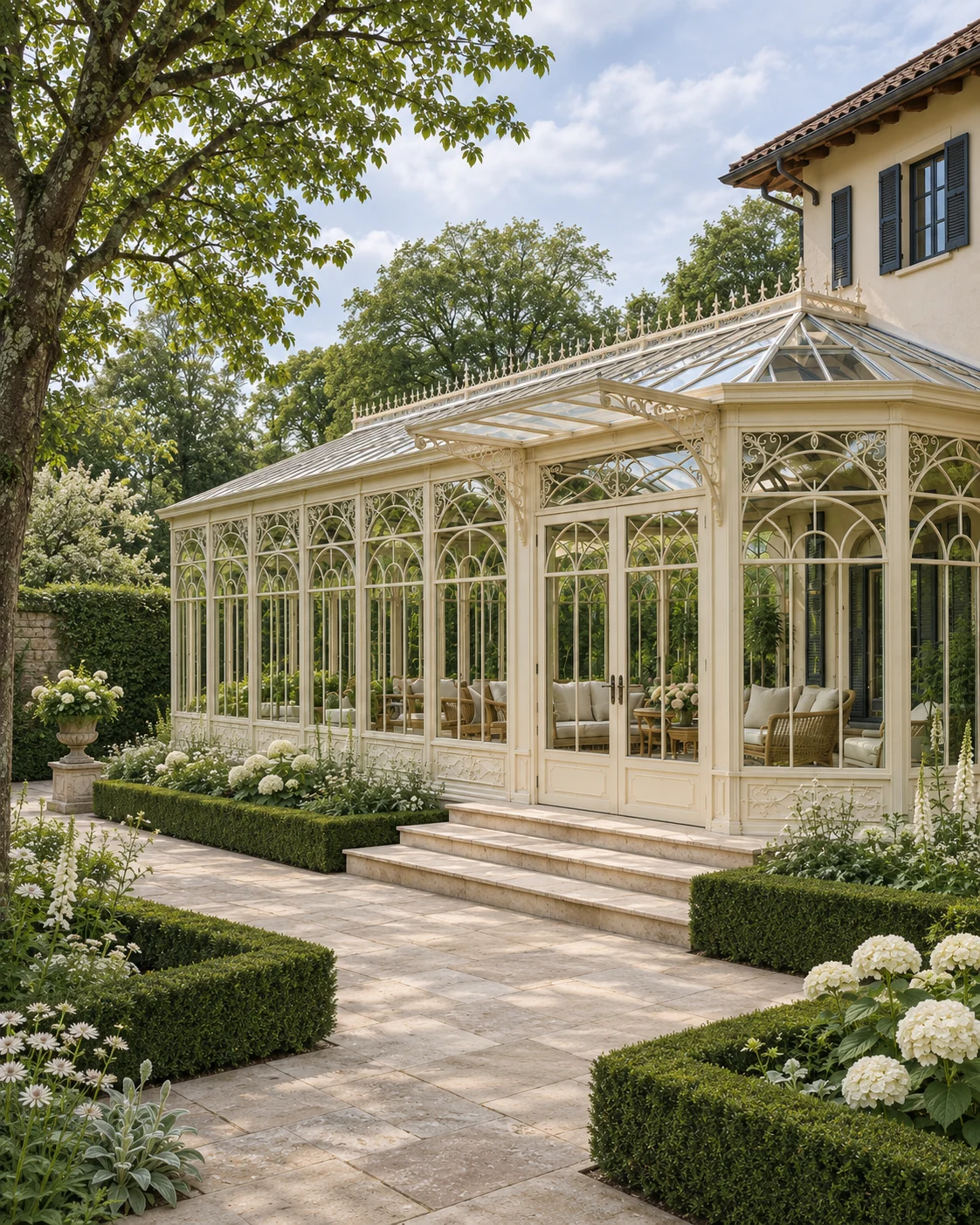
A pale ornamental garden pavilion with repeated arched glazing sits within mature planting. The entrance and roof details create a clear front elevation.
Explore the design
Classical Garden Pavilions · Design visualisation
Pale frames and repeated arched glazing give these pitched-roof pavilions a classical garden character. Steps and a defined entrance create a clear approach through the planting.
Discuss this design direction ↗The architectural character
Look at the relationship between the roof pitch, entrance bay and height of the windows. The light finish makes the arch patterns particularly legible against the trees and glass.
A pitched glazed roof over a pale ornamental frame, with repeated arched lights and a decorative base. An entrance bay with its own small gable projects at the front, reached by steps.
The cream finish makes the arch patterns especially legible against glass, trees and sky.
A freestanding pavilion like this suits a lawn or terrace set away from the house, where it can be seen from several sides.
Roof pitch, entrance bay and window height are set per project. See our glass garden pavilions, the Ivory Arch Pavilion, or compare curved-roof pavilions.
Develop your project
Explore glass garden pavilions in london to consider the design, intended use and scope together.
Compare an open-sided gazebo before deciding on the level of enclosure.
Our design process begins with the setting, intended use and practical requirements.
Share the setting and your preferred direction to discuss your garden project.
Continue exploring
Classical Garden PavilionsDesign collection
A pale ornamental garden pavilion with repeated arched glazing sits within mature planting. The entrance and roof details create a clear front elevation.
Explore the design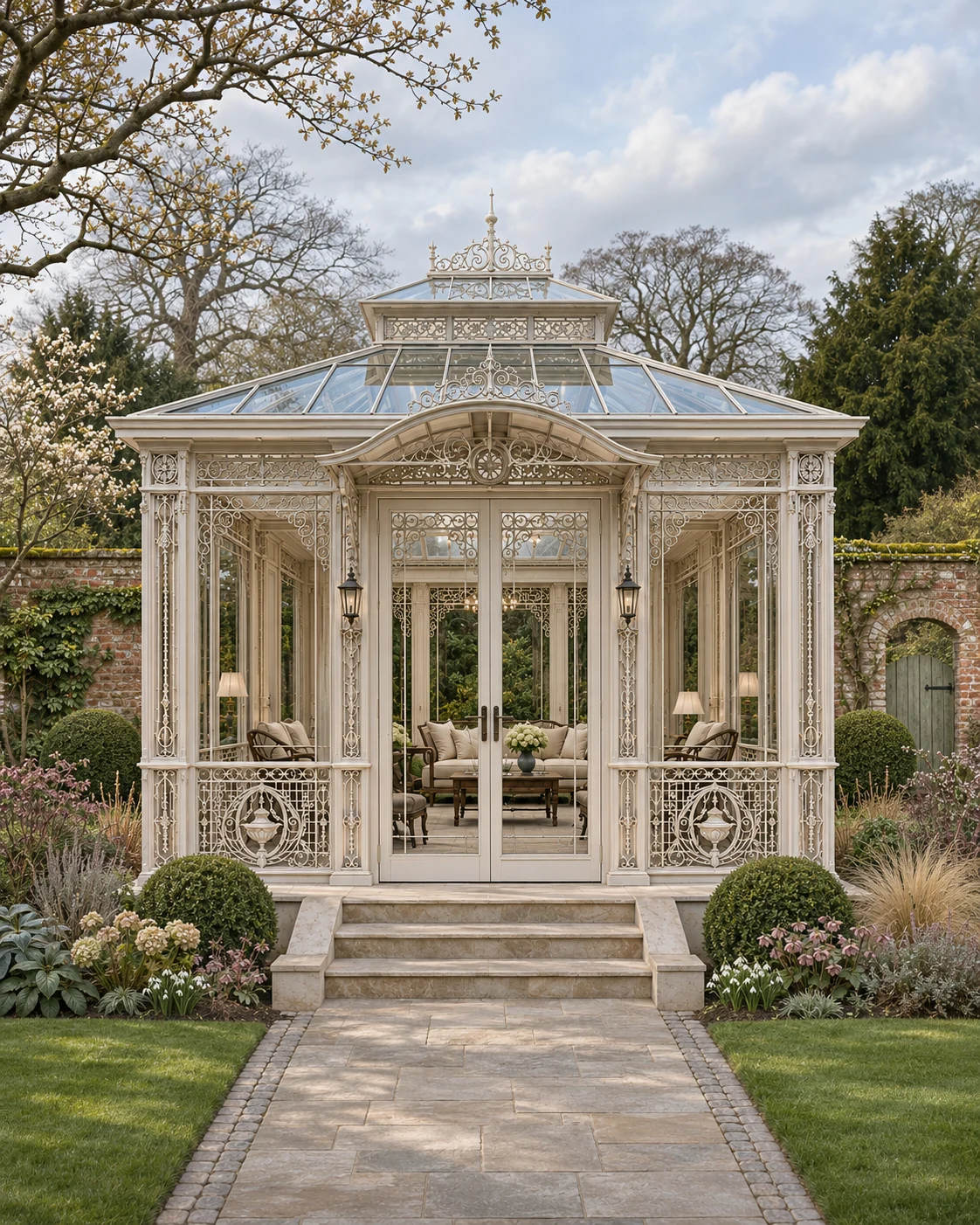 Classical Garden Pavilions
Design collection
A pale garden salon has a pronounced entrance and a glazed roof, with warm interior light and a paved approach. Decorative framing gives the small structure an architectural presence.
Explore the design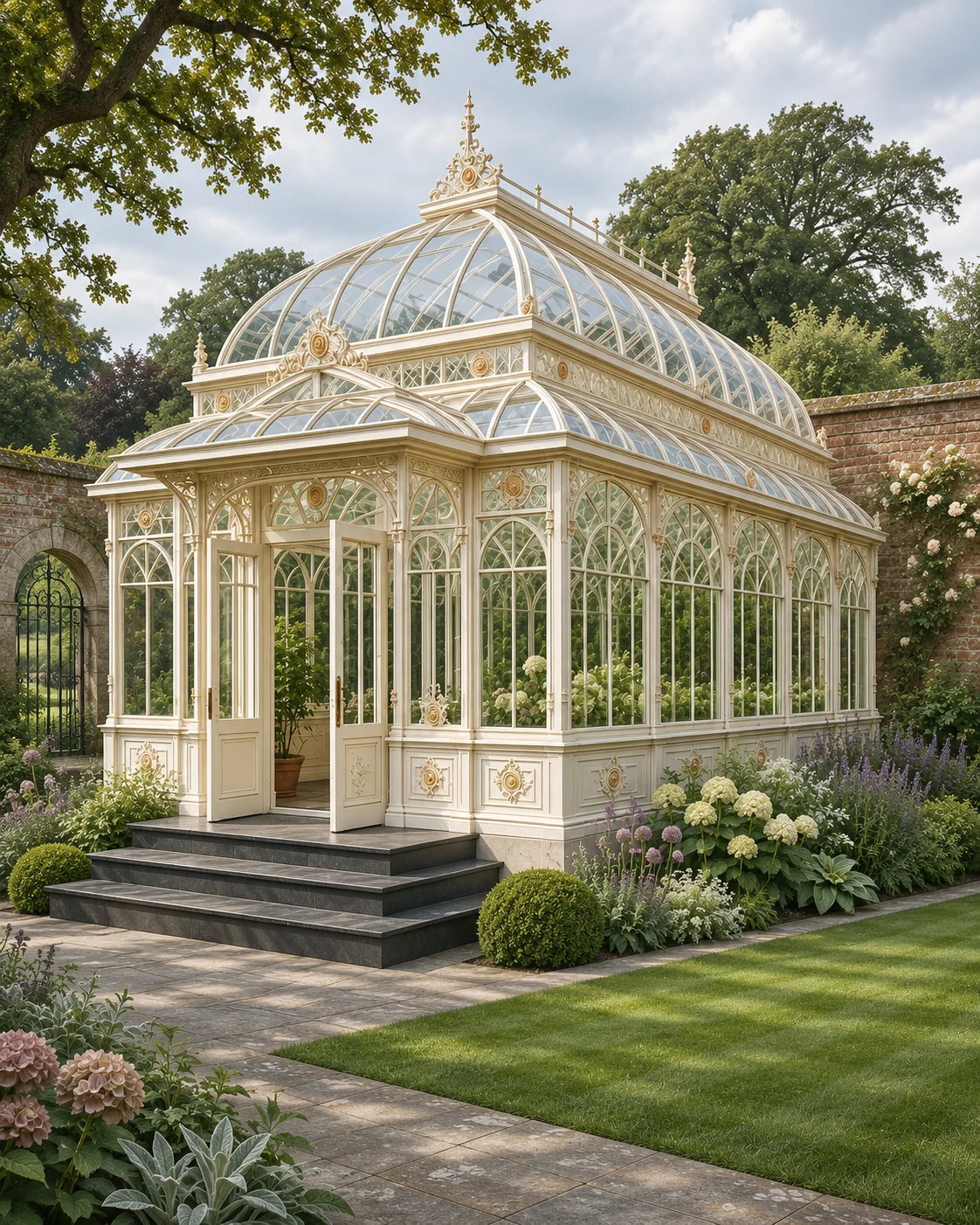 Classical Garden Pavilions
Design collection
A curved glazed roof sits above a pale ornamental frame. Repeated arches and roof-edge details connect the sides and entrance into one architectural composition.
Explore the designYour next space
Share the setting, the way you want to use the space and the designs you are drawn to.
Plan your project